
 Julianna Frisk
Yoga has existed for centuries, yet many people are discovering it in a very modern way. Some come to it through stress, others through injury, curiosity, or a need to slow down. What usually surprises people is that yoga changes more than flexibility. It reshapes how you breathe, how you respond to pressure, and how present you feel in your own body.
Because yoga touches so many layers of experience, it can be hard to put into words. Whether you are new to yoga, writing about it, or simply trying to thank a teacher who made a difference for you, having the right language helps.
Below are words people commonly use to describe yoga poses, yoga teachers, yoga practice, and the feelings that often follow a session.
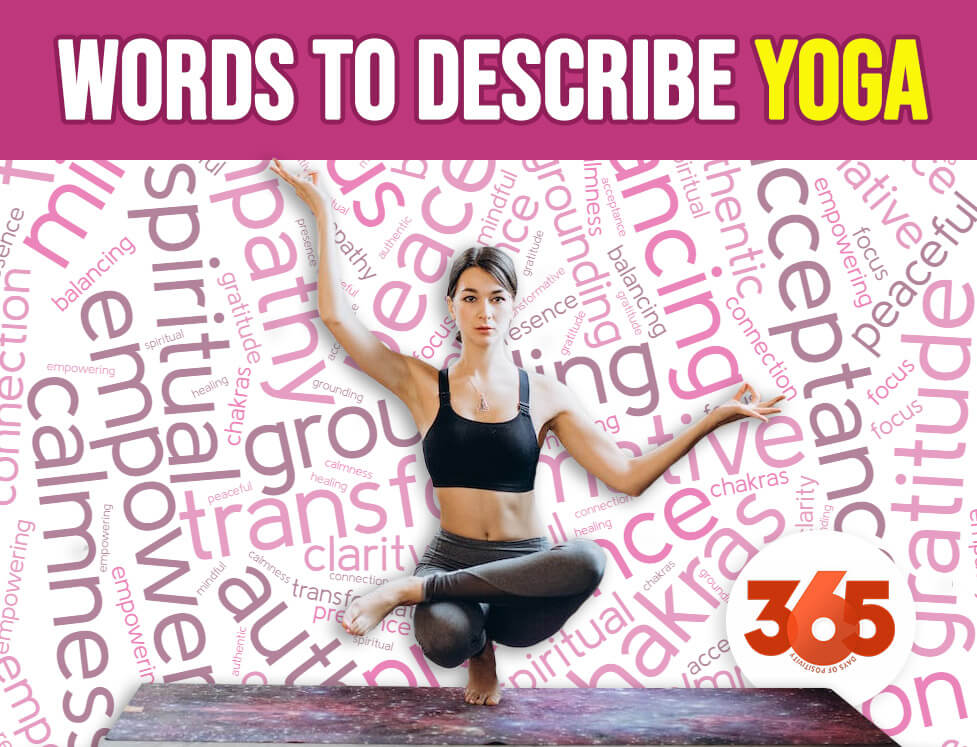
Words to Describe Yoga Poses
Yoga poses are often described by what they create in the body rather than how they look.
Grounding: Poses that create a sense of stability, balance, and connection to the floor beneath you.
Energizing: Poses that wake up the body and increase alertness and circulation.
Balancing: Poses that challenge coordination, focus, and physical control.
Twisting: Poses that rotate the spine and torso to release tension and improve mobility.
Strengthening: Poses that build muscle, endurance, and physical resilience.
Stretching: Poses that lengthen muscles and increase flexibility over time.
Inversion: Poses where the head is lower than the heart, changing perspective and balance.
Words to Describe a Yoga Teacher
A yoga teacher can shape how someone experiences the practice, especially in the beginning.

Compassionate: A teacher who understands that every student arrives with different needs and limits.
Inspiring: A teacher who motivates through presence, example, and encouragement.
Knowledgeable: A teacher with a strong understanding of anatomy, technique, and philosophy.
Patient: A teacher who allows progress to happen at a natural pace without pressure.
Motivating: A teacher who helps students stay consistent, even when practice feels difficult.
Authentic: A teacher who teaches from personal experience rather than performance.
Supportive: A teacher who creates a safe environment for learning and growth.
Attentive: A teacher who observes students closely and offers thoughtful adjustments.
Clear: A teacher who explains poses and transitions in an easy-to-follow way.
Humble: A teacher who remains open to learning and growth.
Passionate: A teacher whose genuine love for yoga is felt in every class.
Words to Describe a Yoga Practice
Yoga practice looks different for everyone, but certain themes appear again and again.

Mindful: A practice centered on awareness of breath, movement, and sensation.
Peaceful: A practice that calms the nervous system and quiets the mind.
Empowering: A practice that builds confidence through awareness and consistency.
Balancing: A practice that restores physical, emotional, and mental equilibrium.
Healing: A practice that supports recovery, stress reduction, and long-term well-being.
Authentic: A practice that reflects personal needs rather than comparison.
Transformative: A practice that gradually reshapes habits, perspective, and self-awareness.
Challenging: A practice that tests strength, flexibility, and focus.
Grounding: A practice that helps you feel steady and present in your body.
Words to Describe Yoga Feelings
Yoga often leaves behind a specific emotional and mental imprint.

Clarity: A feeling of mental sharpness and emotional organization.
Presence: Full attention on the current moment rather than distraction.
Calmness: A settled state that follows physical and mental release.
Awareness: Heightened sensitivity to the body, breath, and thoughts.
Focus: Improved ability to concentrate during and after practice.
Gratitude: Appreciation for the body, breath, and present moment.
Acceptance: A sense of meeting yourself as you are without judgment.
Connection: A feeling of closeness to yourself and others.
Equanimity: Emotional steadiness even when circumstances shift.
Empathy: Increased understanding and sensitivity toward others.
How People Really Talk About Yoga
Yoga is often described as healing, balancing, mindful, and supportive. For some, it is physical. For others, it is emotional or reflective. Many people experience a combination that shifts over time.
The words someone chooses usually say more about their relationship with yoga than yoga itself. Practice changes, and so does the language around it.
That flexibility might be one of yoga’s most accurate descriptions of all.

 Julianna Frisk