

 Julianna Frisk
Have you ever reached a point where you just wanted a clear answer? Not a long explanation, not advice from five different people, just a simple yes, no, or direction. Maybe you are deciding about a relationship, feeling stuck in your career, or sensing that something in your life feels off but you cannot quite name it.
That is often where pendulum work comes in. People use pendulums as a way to tune into intuition and notice what is already happening beneath the surface. It is not about handing over responsibility or letting an object decide your life. It is about slowing down enough to listen.
I personally use a pendulum when my thoughts are running in circles and I need clarity rather than more overthinking. If you are new to this, it is best not to treat the answers as absolute truth right away. The connection builds over time. Think of the pendulum as a tool for insight, not a final authority.
Here are five meaningful questions you can ask your pendulum, along with guidance on how to work with the answers.
What Is My Life Purpose?
Most people, at some point, wonder why they are here and what they are meant to focus on. This question often comes up during transitions, burnout, or moments of restlessness.
Hold your pendulum over your palm and ask, “What is my life purpose?” Pay attention to how it moves and what that movement feels like to you.
- A circular motion often suggests alignment, meaning you are already moving in the right direction, even if it does not feel obvious yet.
- A back and forth motion can point to imbalance or distraction, as if something important is being overlooked.
- If the pendulum stays still, it may be asking you to pause and clarify what you truly want before searching for bigger answers.
Afterward, sit with the response. If it does not resonate, ask a follow-up question. Purpose is not always one big role. Sometimes it is a series of smaller choices that add up over time.
What Is Blocking Me From Achieving My Goals?
Goals rarely fail for just one reason. Sometimes the obstacle is internal, sometimes external, and sometimes it is a mix of both.
Ask your pendulum, “What is blocking me from achieving my goals?” and notice the movement.
- A back and forth swing often points to self-sabotage, fear, or old beliefs that no longer fit who you are now.
- A circular motion may suggest outside influences, such as work conditions, timing, or other people’s expectations.
- If the pendulum does not move, it can be a sign that your goal itself needs reevaluation.
Once the blockage becomes clearer, you can ask more specific questions. The real value comes from what you do with that information afterward.

What Is the Lesson I Need to Learn From This Situation?
Difficult situations tend to repeat until something shifts internally. This question is especially useful when you feel stuck in the same patterns.
Focus on the situation that feels heavy right now. Hold your pendulum over your palm, a table, or even a photo, and ask, “What is the lesson I need to learn from this situation?”
- A back and forth movement often points to release, whether that is a habit, a belief, or a relationship dynamic.
- A circular motion can suggest patience and trust in the process, even if the outcome is not visible yet.
- Stillness may indicate that action is required, not more analysis.
Once the lesson becomes clearer, consider how it applies to your daily choices. Insight is only useful when it leads to change.
What Is The Root Cause Of My Physical Symptoms?
The body often communicates before the mind catches up. Ongoing fatigue, tension, or discomfort can sometimes reflect deeper imbalances.
Before asking, rub your hands together to create warmth and focus. Hold the pendulum over your left palm and ask, “What is the root cause of my physical symptoms?”
- A back and forth motion may point to emotional strain or mental overload.
- A fast circular motion can relate to lifestyle factors such as routine, environment, or habits.
- If there is no movement, it is important to listen to your body and seek professional medical guidance.
Pendulum work should never replace medical care. It can, however, highlight areas that deserve more attention and honesty.
What Steps Should I Take To Improve My Relationship?
Relationships evolve, and sometimes they reach a point where effort needs to shift direction.
Ask your pendulum, “What steps should I take to improve my relationship?” and observe the response.
- A back and forth motion often highlights communication issues or unspoken needs.
- A circular motion may suggest focusing on your own patterns before addressing shared ones.
- Stillness can indicate that outside support or a major decision needs to be considered.
Use the answer as a starting point. Real improvement comes from consistent action, not just insight.
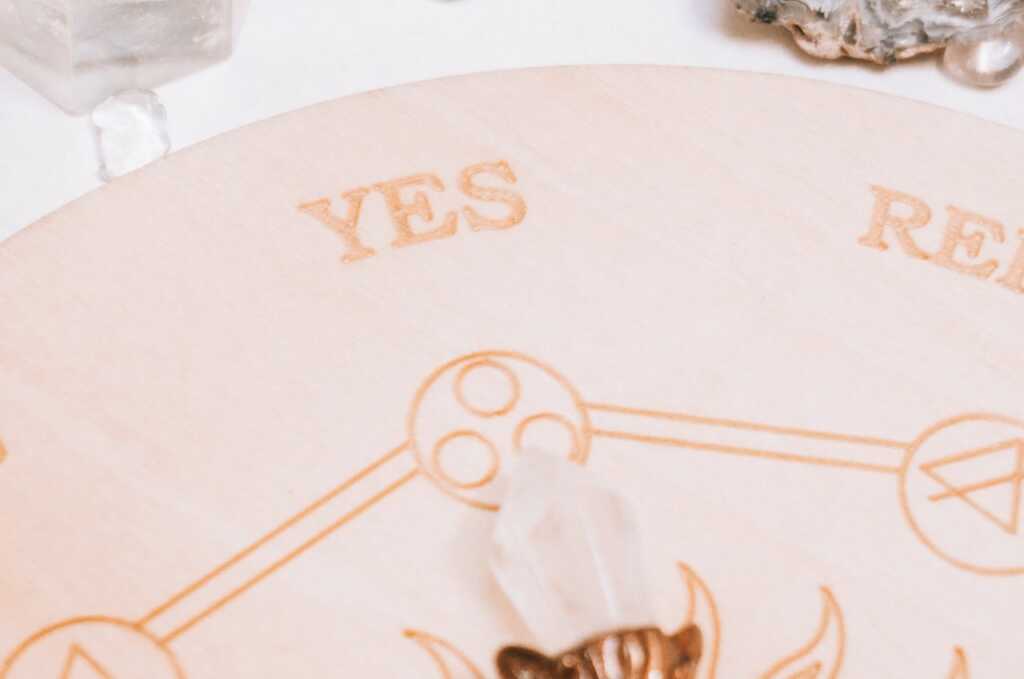
What to Avoid When Using a Pendulum
Pendulum work is simple, but it is easy to misuse if approached carelessly. A few things to keep in mind:
- Avoid asking questions when emotions are extremely charged.
- Do not try to force or influence the movement.
- Cleanse your pendulum regularly in a way that feels right to you.
- Practice consistently rather than jumping in only during crises.
The clearer your intention, the clearer the experience tends to be.
Pendulums have been used for centuries as tools for insight, clarity, and personal exploration. Their effectiveness depends greatly on your state of mind, honesty, and willingness to take responsibility for your choices.
If you are just starting out, treat the answers as guidance rather than certainty. Over time, as trust and awareness grow, the pendulum becomes less about the object itself and more about your own intuition coming into focus.


 Julianna Frisk